


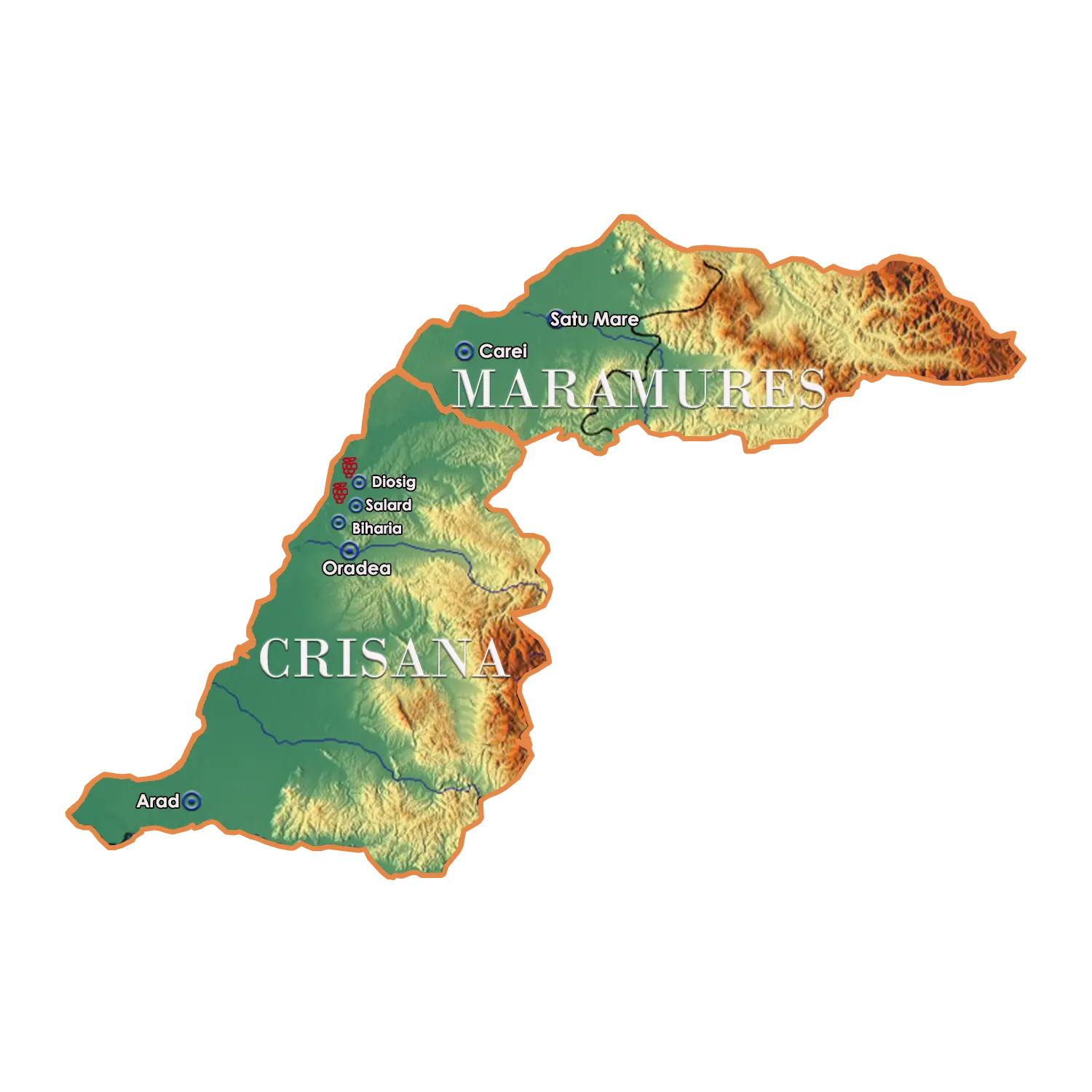
The Diosig vineyard lies north and northeast of Oradea, in the western part of Romania, within a landscape where viticulture has been documented since the late 16th century. Its long history reflects the broader cultural influences that have shaped this borderland over the centuries, creating a wine-growing tradition with a character of its own.
The vineyard's terroir is strongly influenced by its clay-illuvial brown soils and clay-illuvial chernozems. Their structure and water-retention characteristics, combined with the continental climate of western Romania, provide favourable conditions for grape cultivation. Warm summers encourage ripening, while cold winters create a pronounced seasonal cycle that has long shaped local vineyard practices.
One of the most distinctive aspects of Diosig is the persistence of traditional agricultural practices. Historically, viticulture formed part of a broader cultivated landscape rather than existing in isolation. Tomatoes, peaches and other crops could be grown alongside or between vineyard parcels, reflecting an agricultural culture in which vines were integrated into the everyday life of local communities.
Traditional cellars form another important element of Diosig's wine identity. Their particular underground conditions historically encouraged the development of characteristic cellar microflora, including mould on cellar walls, while maintaining the stable temperature and humidity required for wine production and maturation. These cellars remain a tangible connection between the wines of today and generations of local winemaking tradition.
The vineyards support a broad selection of both Romanian and international grape varieties. Indigenous grapes such as Feteasca Neagra and Feteasca Alba grow alongside internationally established varieties including Cabernet Sauvignon, Merlot and Sauvignon Blanc. This combination allows Diosig to produce both red and white wines while retaining a strong connection to Romania's indigenous viticultural heritage.
Today, Diosig represents an important part of the wine heritage of western Romania. Its identity emerges from the interaction between continental climate, distinctive soils, historic cellars and agricultural traditions that have survived across generations. Rather than being defined by a single grape variety or wine style, Diosig is distinguished by the continuity of its wine culture and by the diversity that its western terroir supports.
Discover the wines of Diosig - Romanian and international varieties shaped by the continental climate of western Romania, distinctive clay-rich soils and a centuries-old tradition of vineyards and historic cellars.


