


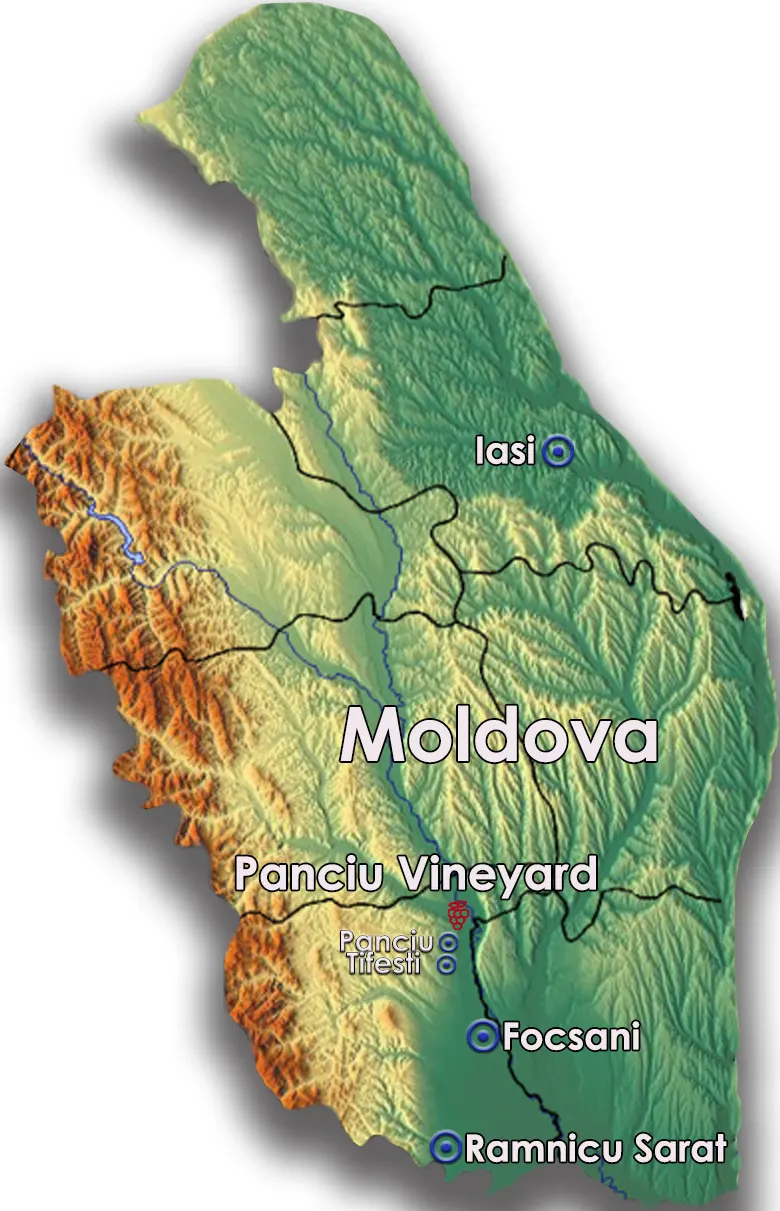
Panciu forms part of the historic wine landscape of Vrancea, together with the neighbouring vineyards of Odobesti and Cotesti. This concentration of vineyards has played an important role in the development of the Moldavia wine region and remains one of the best-known viticultural landscapes in eastern Romania.
The relief of Panciu is defined by gentle hills, terraces and interfluves, while the vineyard occupies a transitional area between the Subcarpathian zone to the west and the Lower Siret Plain to the east. This geography, combined with moderate continental climatic conditions, creates favourable conditions for grape varieties that benefit from freshness and balanced ripening.
Panciu has a long documented wine history. In 1527, Georg von Reichersterffer, emissary of Ferdinand of Habsburg, recorded the existence of vineyards in the area during the reign of Petru Rares. Historical references later associated the territory with the name Podgoria Crucilor, adding another layer to the vineyard's long viticultural identity.
Traditional Romanian grape varieties remain central to Panciu. Babeasca Neagra, Plavaie, Feteasca Neagra and Feteasca Alba have been cultivated here for generations and continue to express the vineyard's connection with the historic wine culture of Vrancea.
One of the defining characteristics of Panciu is the natural freshness of its wines. The combination of local soils, balanced humidity and favourable sun exposure supports wines with elevated acidity, an important advantage for the production of Romanian sparkling wines. This has given Panciu a particularly strong association with sparkling wine and adds a distinctive dimension to its broader viticultural identity.
Discover the wines of Panciu - from traditional Babeasca Neagra, Plavaie and Feteasca varieties to sparkling wines shaped by the vineyard's natural freshness and historic terroir of Vrancea.